Email: [email protected]

Service hotline: +86-18022178932

Electric vehicles (EVs) are revolutionizing the global transportation landscape, offering a sustainable alternative to internal combustion engine vehicles. At the core of this revolution is the lithium-ion battery—a powerful, efficient, and increasingly affordable energy storage solution that has become the gold standard for EVs.

This article explores why lithium-ion batteries are central to the future of electric vehicles, highlighting their performance advantages, technological maturity, and role in enabling widespread EV adoption.

What Are Lithium-Ion Batteries?

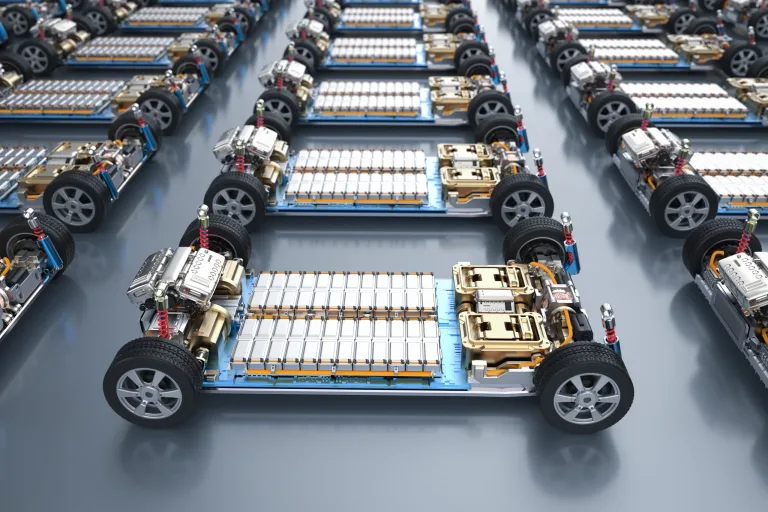
Lithium-ion (Li-ion) batteries are rechargeable batteries that use lithium ions as the primary charge carrier. These ions move from the anode to the cathode during discharge and back again during charging. The batteries consist of:

  • Anode (commonly graphite)
  • Cathode (often made from lithium-based compounds like NMC or LFP)
  • Electrolyte (facilitates ion transport)
  • Separator (prevents short-circuiting between electrodes)

Their compact structure, high energy density, and ability to deliver large amounts of power make lithium-ion batteries ideal for electric vehicle applications.

Why Lithium-Ion Batteries Are the Future of Electric Vehicles

1. High Energy Density Enables Greater Driving Range

A key advantage of lithium-ion batteries is their superior energy density, meaning they can store more energy per unit of weight or volume than other battery types.

  • Longer range: Modern EVs equipped with lithium-ion batteries can travel 300–500 km (200–300 miles) or more on a single charge.
  • Better performance: High energy density supports faster acceleration and improved efficiency.

This capability directly addresses “range anxiety,” one of the biggest concerns consumers have about switching to electric vehicles.

2. Fast Charging and High Power Output

Lithium-ion batteries support high charge and discharge rates, allowing for quick energy transfer.

  • Fast charging: Many lithium-ion batteries can charge to 80% in 30–45 minutes with high-speed chargers.
  • Regenerative braking: They efficiently absorb energy during braking, which improves overall vehicle efficiency.

This responsiveness makes lithium-ion batteries well-suited for stop-and-go traffic, highway driving, and long-distance travel.

3. Long Lifespan and Durability

Lithium-ion batteries have a longer life than most other rechargeable chemistries, often lasting 1,000–3,000+ full charge cycles, depending on battery type and management.

  • Minimal capacity loss: With proper thermal and charge management, they retain most of their capacity for 8–10 years or more.
  • Low maintenance: Unlike older battery technologies, Li-ion batteries are sealed and do not require regular servicing.

This durability lowers the total cost of ownership and improves the long-term value of EVs.

4. Enhanced Efficiency and Lightweight Design

Efficiency is critical in electric mobility. Lithium-ion batteries offer round-trip energy efficiency of 90–95%, meaning very little energy is lost during charging and discharging.

  • Lighter weight: Compared to lead-acid or nickel-metal hydride batteries, Li-ion batteries reduce vehicle weight, which translates to better handling, performance, and range.

This makes them ideal for not just cars, but also electric buses, motorcycles, and trucks.

5. Versatility and Scalability

Lithium-ion batteries come in a variety of chemistries and configurations, allowing them to be tailored to specific EV needs:

  • NMC (Nickel Manganese Cobalt): High energy density and power output.
  • LFP (Lithium Iron Phosphate): Excellent thermal stability and long cycle life.
  • NCA (Nickel Cobalt Aluminum): High specific energy and commonly used in premium EV models.

This flexibility allows manufacturers to optimize for cost, safety, performance, or longevity, depending on the target market.

6. Declining Costs Make EVs More Affordable

Battery cost is a major driver of EV pricing. Over the past decade, the cost of lithium-ion batteries has fallen dramatically—from over $1,000 per kWh in 2010 to well under $150 per kWh today.

  • Economies of scale: Mass production and improvements in battery chemistry have driven prices down.
  • Continued innovation: Advancements in materials, manufacturing processes, and recycling are pushing costs even lower.

This trend is making EVs more accessible to mainstream consumers and helping automakers achieve price parity with internal combustion engine vehicles.

7. Environmental Benefits and Energy Sustainability

Lithium-ion batteries are essential in reducing the carbon footprint of transportation.

  • Zero tailpipe emissions: EVs produce no emissions while driving.
  • Grid integration: Batteries can store renewable energy, enabling cleaner electricity to power vehicles.
  • Improved recycling: Growing investment in battery recycling is making lithium-ion production more circular and sustainable.

When paired with renewable energy sources, lithium-ion-powered EVs represent one of the cleanest transportation options available.

8. Continuous Innovation Points to a Bright Future

Battery research is advancing rapidly, with ongoing improvements in:

  • Energy density (more range with smaller batteries)
  • Solid-state electrolytes (for increased safety and performance)
  • Battery management systems (for smarter charging and health monitoring)
  • Recycling technology (to recover valuable materials like lithium, cobalt, and nickel)

These innovations promise safer, more affordable, and longer-lasting lithium-ion batteries for the next generation of EVs.

Challenges and Considerations

Despite their strengths, lithium-ion batteries are not without challenges:

  • Resource sourcing: Mining of lithium, cobalt, and other materials raises environmental and ethical concerns.
  • Thermal management: Without proper systems, overheating and degradation can occur.
  • End-of-life handling: Recycling infrastructure needs to expand to manage increasing battery waste.

However, with responsible sourcing, better thermal design, and global recycling efforts, these challenges are being addressed head-on.

Conclusion: Driving the Electric Future

Lithium-ion batteries are the technological foundation of modern electric vehicles, offering the ideal combination of energy density, performance, safety, and cost efficiency. Their continued evolution is key to accelerating the global transition to clean, electric mobility.

As charging infrastructure expands, battery innovations continue, and production costs decline, lithium-ion batteries will remain at the forefront of the EV movement—paving the way for a future that’s cleaner, quieter, and more sustainable for everyone.

Leave a Reply

Your email address will not be published. Required fields are marked *