
As the demand for energy storage solutions continues to grow, the performance of batteries is under intense scrutiny. From smartphones to electric vehicles (EVs), the need for faster charging, longer-lasting, and more efficient batteries is paramount. One of the most significant areas of research and development is the enhancement of current collectors in batteries, which are critical components in the overall efficiency of energy storage systems.
Among the latest advancements in battery technology, nanostructured current collectors are emerging as a promising solution for enabling faster charging and enhancing battery performance. These innovative materials offer the potential to drastically reduce charging times, improve power density, and extend battery lifespan. In this article, we will explore what nanostructured current collectors are, how they work, and their potential applications in fast-charging batteries.
What Are Current Collectors in Batteries?
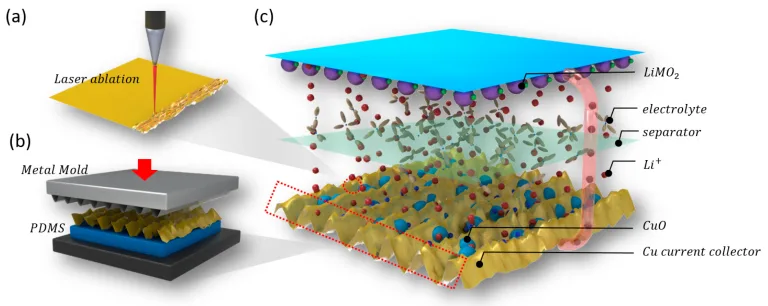
In a battery, the current collector serves a critical function as a conductive material that facilitates the flow of electrons between the battery’s anode or cathode and the external circuit. In essence, current collectors help to collect and distribute the current generated during the electrochemical reactions that occur within the battery.
Traditional current collectors are typically made from metals like copper (for the anode) and aluminum (for the cathode) in lithium-ion batteries, which have been the standard for portable electronics and electric vehicles for years. These materials, while effective, can present limitations in terms of conductivity, structural integrity, and the ability to handle rapid charging cycles.
Why Nanostructured Current Collectors?
Nanostructured materials are engineered at the nanoscale (typically less than 100 nanometers), where their properties differ significantly from their bulk counterparts. When used as current collectors, these materials offer enhanced surface area, electrical conductivity, mechanical strength, and chemical stability. These improvements can directly translate into faster charging, longer-lasting, and more efficient batteries.
There are several key reasons why nanostructured current collectors are gaining attention in the battery technology industry:
- Increased Surface Area
Nanostructured materials, due to their unique architecture at the nanoscale, offer an exponentially higher surface area than traditional bulk materials. This increased surface area enables better contact between the current collector and the active materials in the battery electrodes. In turn, this results in more efficient electron and ion flow, a critical factor for fast-charging performance.
For example, nanowires or nanotubes can form dense networks that significantly increase the surface area compared to flat metallic plates. This allows for a faster and more efficient transfer of charge, which is a key factor in enabling fast-charging batteries.
- Improved Electrical Conductivity
Nanostructured current collectors can be engineered to enhance the electrical conductivity of the battery, reducing internal resistance. By using materials with high conductivity at the nanoscale, the energy losses due to heat generation are minimized, allowing for more efficient energy storage and faster charge/discharge cycles.
Materials such as carbon nanotubes, graphene, and silver nanowires have shown exceptional electrical conductivity. These materials, when incorporated into current collectors, can facilitate the rapid movement of electrons during charging, thereby reducing the charging time.
- Enhanced Mechanical Strength and Durability
Fast charging cycles can lead to structural stress and degradation of battery components, ultimately reducing the lifespan of the battery. Nanostructured current collectors can improve the mechanical strength and flexibility of the current collector, making it more resistant to the stresses that arise during rapid charging and discharging cycles.
For instance, nanostructured metals and composite materials are stronger and more durable than their traditional counterparts. These materials are less likely to experience fatigue or failure over time, improving the overall lifespan of the battery. This is especially important for applications like electric vehicles (EVs), where battery longevity is a critical factor.
- Faster Ion Diffusion
One of the challenges with fast-charging batteries is the slow diffusion of ions within the electrolyte and electrodes, which limits the rate at which the battery can charge. Nanostructured current collectors can facilitate faster ion diffusion by providing a more efficient pathway for ions to travel between the anode and cathode. This enhanced ionic conductivity can help reduce charging times and improve overall battery performance.
Nanostructures such as nanoparticles or porous materials allow for better electrolyte penetration and more efficient ion transport, which is especially beneficial in high-power applications such as EVs or high-performance electronics.
Types of Nanostructured Current Collectors
Several types of nanostructured materials have been explored for use as current collectors in fast-charging batteries. Each type has its own set of advantages, depending on the specific application.
- Graphene-Based Current Collectors
Graphene, a single layer of carbon atoms arranged in a two-dimensional lattice, has gained significant attention due to its extraordinary electrical conductivity, mechanical strength, and flexibility. When used as a current collector, graphene can provide superior performance in fast-charging batteries. Its high conductivity and large surface area allow for fast electron and ion transport, making it ideal for high-power applications.
Graphene-based current collectors also have the advantage of being lightweight, which is crucial in applications such as electric vehicles, where weight plays a significant role in performance and range.
- Carbon Nanotube (CNT) Current Collectors
Carbon nanotubes, with their high electrical conductivity, thermal stability, and mechanical strength, are another promising candidate for nanostructured current collectors. CNTs have a unique hollow tubular structure, which provides both high surface area and the ability to facilitate efficient electron and ion transport.
CNTs are also highly resistant to corrosion and can withstand extreme operating conditions, making them suitable for use in fast-charging batteries for both consumer electronics and electric vehicles.
- Silver Nanowire Current Collectors
Silver nanowires are known for their exceptional electrical conductivity and have been explored as current collectors in fast-charging batteries. The high conductivity of silver enables fast charge/discharge cycles while maintaining low internal resistance. Additionally, silver nanowires can be combined with other materials to create composite current collectors that offer enhanced mechanical properties and stability.
However, the high cost of silver can be a limiting factor, especially for large-scale applications like EVs, but research is ongoing to develop more affordable alternatives.
- Metal Nanowire Current Collectors
Metal nanowires, such as copper nanowires or tungsten nanowires, have also been used to create efficient current collectors for fast-charging batteries. These materials offer excellent electrical conductivity and can be tailored to meet the specific needs of high-performance batteries. Metal nanowires also provide enhanced mechanical flexibility and resistance to structural degradation during charging cycles.
Applications of Nanostructured Current Collectors
The use of nanostructured current collectors in fast-charging batteries has far-reaching implications for various industries and technologies:
- Electric Vehicles (EVs): Faster charging and longer battery life are critical for EV adoption. Nanostructured current collectors can significantly reduce charging times, providing a more convenient experience for drivers and reducing the overall downtime of the vehicle.
- Consumer Electronics: Smartphones, laptops, and other devices benefit from shorter charging times and longer-lasting batteries. The adoption of nanostructured current collectors can contribute to the development of batteries that charge in a fraction of the time compared to current technologies.
- Energy Storage Systems: Nanostructured current collectors are also poised to enhance large-scale grid energy storage systems, improving their ability to store and quickly discharge energy during peak demand times.
- Wearable Technology: For wearable devices, such as smartwatches or fitness trackers, fast-charging and compact batteries are essential. Nanostructured current collectors can help create batteries that charge quickly and provide longer usage times in these compact devices.
Challenges and Future Outlook
While the potential of nanostructured current collectors is clear, there are still several challenges to overcome, including the scalability of production, material costs, and ensuring the long-term stability of these materials in battery environments. Nonetheless, the rapid advancements in nanotechnology and materials science suggest that these issues will be addressed in the near future, bringing us closer to realizing the full potential of fast-charging, high-performance batteries.
Conclusion
Nanostructured current collectors represent an exciting frontier in battery technology. By offering enhanced conductivity, durability, and ion diffusion capabilities, they hold the potential to revolutionize the way we charge and use batteries in everything from consumer electronics to electric vehicles. As research and development continue to progress, it is likely that we will see nanostructured current collectors become an integral component of fast-charging battery systems, improving efficiency and performance across a range of industries.
Related Articles
- Everything You Need to Know About Lithium Batteries in Cold Weather
- Impact of Fast Charging on Degradation of Lithium-Ion Batteries in EVs
- Lithium Batteries in Electric Boats: Efficient and Eco-Friendly Power
- Lithium Batteries and Safety Concerns: What You Need to Know
- What Low Temperatures Do to Your Battery: Why Batteries Die in Cold Weather
