
The shift towards renewable energy and decentralized power systems has made microgrids an increasingly popular solution for enhancing energy reliability, sustainability, and resilience. Microgrids, which are small-scale power systems that can operate independently or in conjunction with the main grid, often rely on energy storage systems to balance supply and demand. Among the various energy storage options, lithium-ion (Li-ion) batteries have emerged as the preferred choice for microgrid applications due to their efficiency, scalability, and long cycle life. In this article, we’ll explore how lithium-ion batteries are enhancing power storage in microgrids and their benefits, challenges, and future potential.
1. Understanding Microgrids and the Role of Energy Storage
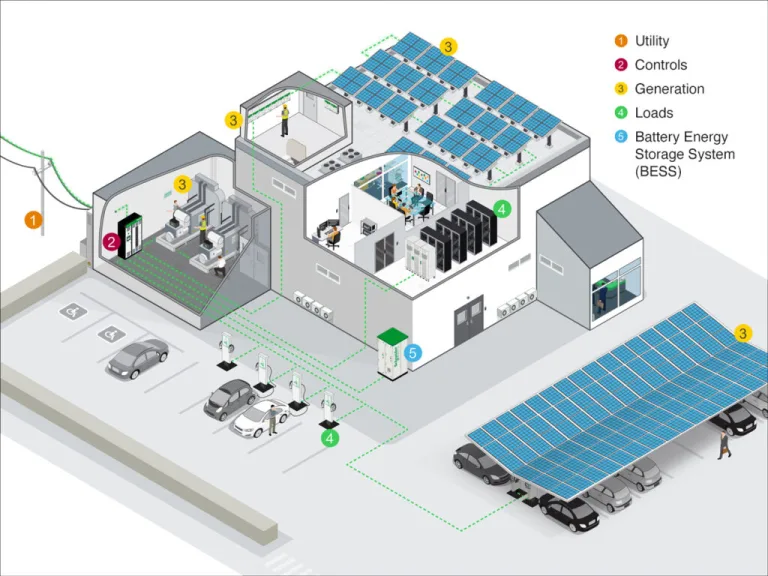
A microgrid is essentially a localized energy system that can operate autonomously, providing power to a defined area such as a campus, neighborhood, or remote community. Microgrids typically integrate multiple energy sources, including renewable sources like solar panels, wind turbines, and battery storage, along with conventional power generation.
One of the core challenges of managing a microgrid is balancing the intermittent nature of renewable energy generation with fluctuating energy demand. This is where energy storage systems (ESS) come in, allowing excess energy to be stored when supply exceeds demand and released when demand surpasses supply. Lithium-ion batteries are particularly effective in this role due to their high energy density, rapid response times, and long cycle life.
2. Why Lithium-Ion Batteries Are Ideal for Microgrids
Lithium-ion batteries offer several distinct advantages over other energy storage technologies, making them a popular choice for microgrids.
a) High Energy Density
One of the main benefits of lithium-ion batteries is their high energy density, which means they can store more energy in a smaller, lighter package compared to other battery technologies. This is crucial in microgrid applications where space and weight limitations can be a challenge, especially in remote areas or mobile microgrid systems.
For example, lithium-ion batteries can store 150–250 Wh/kg of energy, while other technologies, like lead-acid batteries, typically store around 40–80 Wh/kg. This higher energy density enables lithium-ion batteries to deliver more power without occupying as much physical space, a key advantage in microgrid designs.
b) Long Cycle Life
Lithium-ion batteries are known for their long cycle life, which refers to the number of charge-discharge cycles a battery can undergo before its capacity significantly diminishes. Most lithium-ion batteries can last for 2,000–5,000 cycles, depending on the specific chemistry and usage conditions, far outlasting lead-acid or other traditional battery types.
In microgrids, which often require continuous, long-term operation, the longevity of lithium-ion batteries translates to lower maintenance costs, fewer replacements, and more reliable performance over time. This can be particularly beneficial for off-grid microgrids, which may not have easy access to maintenance resources.
c) Fast Response Time
Lithium-ion batteries have excellent charge and discharge characteristics, allowing them to respond to changes in energy demand almost instantly. This is especially important in microgrid applications, where the demand can fluctuate rapidly, and quick balancing is needed to avoid disruptions in power supply.
For example, when a cloud passes over a solar array, causing an immediate drop in generation, lithium-ion batteries can discharge quickly to compensate. Similarly, they can charge quickly when excess renewable energy is available. This fast response time helps stabilize the grid and improve its overall reliability.
d) Scalability and Flexibility
Lithium-ion batteries are highly scalable, meaning they can be configured in various sizes to meet the specific needs of a microgrid. Whether for a small rural community or a large industrial facility, lithium-ion battery systems can be tailored to deliver the required energy storage capacity.
Moreover, they can be integrated with other energy sources, such as solar, wind, or combined heat and power (CHP) systems, to create a more robust and efficient microgrid solution. This flexibility makes lithium-ion batteries suitable for a wide range of microgrid applications, from residential areas to large-scale industrial parks.
3. Benefits of Lithium-Ion Batteries in Microgrids
a) Increased Energy Independence
Lithium-ion batteries in microgrids help reduce dependency on the main power grid, making the system more resilient to grid failures or power outages. In the event of a grid blackout, a microgrid equipped with lithium-ion batteries can seamlessly transition to islanding mode, where it operates independently to continue providing power to critical loads such as hospitals, emergency services, and communication systems.
b) Cost-Effectiveness in the Long Run
While the initial capital cost of lithium-ion batteries is higher than that of traditional storage options like lead-acid batteries, the long-term savings can be significant. The reduced need for maintenance, longer lifespan, and high efficiency of lithium-ion batteries contribute to their cost-effectiveness over time. Additionally, as the technology matures, the cost per kilowatt-hour (kWh) of lithium-ion batteries is expected to continue decreasing, making them more accessible for microgrid projects.
c) Supporting Renewable Energy Integration
Lithium-ion batteries play a crucial role in the integration of renewable energy into microgrids by helping balance the intermittent nature of solar and wind energy. By storing excess renewable energy during periods of high generation and releasing it when generation is low, lithium-ion batteries ensure that renewable energy can be utilized more effectively and displaced fossil fuel generation.
This is particularly important for microgrids in remote or islanded regions, where access to conventional power sources may be limited, and the ability to operate using solely renewable energy is a key goal.
4. Challenges and Considerations for Lithium-Ion Batteries in Microgrids
Despite the many benefits, lithium-ion batteries are not without their challenges. Some considerations for their use in microgrids include:
a) Initial Cost
While the long-term cost-effectiveness of lithium-ion batteries is well-documented, the initial investment can still be a barrier for some microgrid projects. The high upfront cost of lithium-ion batteries, along with the additional cost of battery management systems (BMS) and inverters, can make these systems prohibitively expensive, especially for small-scale applications.
b) Thermal Management
Lithium-ion batteries are sensitive to temperature fluctuations, and thermal management is critical for ensuring their optimal performance and longevity. In extreme heat or cold conditions, the performance of lithium-ion batteries can degrade, and the risk of thermal runaway (a dangerous situation where the battery overheats) can increase.
To mitigate these risks, microgrids using lithium-ion batteries must incorporate cooling systems and temperature controls to maintain a stable operating temperature range.
c) Recycling and Sustainability
As with all battery technologies, the environmental impact of lithium-ion batteries must be considered, especially concerning their disposal and recycling at the end of life. While lithium-ion batteries have a relatively low environmental impact compared to lead-acid or other technologies, recycling programs and circular economy strategies are essential to minimizing their environmental footprint.
5. The Future of Lithium-Ion Batteries in Microgrids
The future of lithium-ion batteries in microgrids looks promising, with several ongoing advancements aimed at addressing the challenges and maximizing their performance. Some exciting developments include:
a) Energy Management and Smart Grids
As microgrids become smarter and more interconnected, the integration of advanced energy management systems (EMS) will allow for more efficient control of battery storage and energy distribution. With the aid of machine learning and AI-driven systems, lithium-ion batteries will be better able to predict energy demand and optimize their usage, making microgrids even more efficient.
b) Reduced Costs and Improved Efficiency
As the demand for energy storage continues to grow, economies of scale will drive down the costs of lithium-ion batteries. Additionally, ongoing innovations in battery chemistry, solid-state batteries, and advanced anode/cathode materials will further enhance the energy density and cycle life of lithium-ion batteries.
c) Integration with Blockchain and Peer-to-Peer Energy Trading
In the future, microgrids may leverage blockchain technology for transparent, secure, and efficient peer-to-peer energy trading. Lithium-ion batteries could be used to store energy for later sale or distribution within the microgrid, allowing local communities or businesses to participate in distributed energy markets.
Conclusion
Lithium-ion batteries are quickly becoming the cornerstone of modern microgrids, providing efficient, scalable, and reliable energy storage solutions. Their high energy density, long cycle life, fast response times, and ability to integrate with renewable energy systems make them ideal for powering decentralized grids, particularly in areas with unreliable or limited access to the main electricity grid. While there are challenges to overcome, the ongoing advancements in lithium-ion battery technology make them a critical component in the future of sustainable, resilient microgrids.
Related Articles
- Mitigating Fire Risks in High-Energy Lithium Batteries: Material Innovations
- Sustainable Recycling Methods for Spent Lithium Batteries
- Lithium Batteries in Marine Applications: Corrosion Resistance and Waterproofing
- High-Throughput Screening of Solid Polymer Electrolytes: Advancements and Applications
- Why Lithium Ion Phosphate Batteries?
