
Space exploration demands high-performance, reliable, and long-lasting power sources. From rovers exploring Mars to satellites orbiting Earth, spacecraft rely on advanced battery technology to survive the harsh conditions of space. In recent decades, lithium-ion (Li-ion) batteries have become the preferred choice for powering space missions, replacing older nickel-based and silver-zinc battery chemistries. Their high energy density, long cycle life, and superior weight-to-power ratio make them ideal for space applications.
This article explores how lithium batteries are revolutionizing space exploration, their advantages over traditional battery chemistries, and the challenges they face in the extreme environment of space.
Why Lithium Batteries for Space Exploration?
Spacecraft, rovers, and satellites require high-energy, lightweight, and durable power sources to operate in the extreme conditions of space. Lithium batteries meet these requirements due to the following key advantages:
- High Energy Density and Lightweight Design
Lithium-ion batteries offer a higher energy density compared to older battery technologies like nickel-metal hydride (NiMH) and silver-zinc batteries. This means they can store more energy per unit of weight, making them particularly valuable for spacecraft, where every kilogram matters.
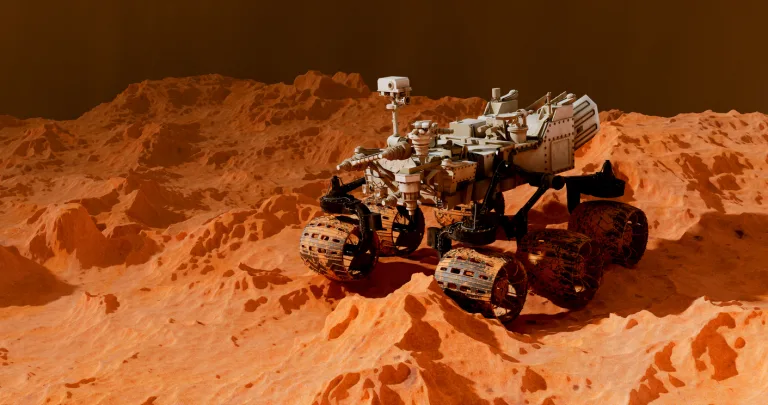
- Example: The Curiosity Rover and Perseverance Rover, both exploring Mars, use lithium-ion batteries to store and manage power efficiently while reducing the overall weight of the system.
- Long Cycle Life and Durability
Rovers and satellites require batteries that can withstand multiple charge-discharge cycles over extended missions. Lithium batteries have a longer cycle life compared to traditional batteries, ensuring they remain functional for years.
- Example: The Hubble Space Telescope, which was launched in 1990, originally used nickel-hydrogen batteries but was later upgraded with lithium-ion batteries for improved longevity and reliability.
- Fast Charging and High Discharge Rate
Satellites and space probes rely on solar panels for energy generation. However, during periods of darkness (such as when orbiting the night side of a planet), batteries must store and release power efficiently. Lithium-ion batteries can:
- Charge quickly when exposed to sunlight.
- Deliver high discharge rates to power instruments, communications, and propulsion systems.
- Example: The International Space Station (ISS) replaced its nickel-hydrogen batteries with lithium-ion batteries, reducing weight and improving efficiency.
- Low Self-Discharge and High Efficiency
Batteries in space must retain energy for long periods. Lithium-ion batteries have a low self-discharge rate, meaning they lose very little energy when not in use, ensuring power is available when needed.
Applications of Lithium Batteries in Space Missions
Lithium batteries are used in various space exploration applications, including:
- Rovers (Lunar and Martian Exploration)
Rovers exploring planetary surfaces require reliable power storage to operate scientific instruments, cameras, and mobility systems.
- Mars Rovers (Curiosity & Perseverance):
- Powered by lithium-ion batteries charged by radioisotope thermoelectric generators (RTGs).
- Batteries store excess energy during the day for use at night and during dust storms.
- Lithium batteries help sustain the heaters needed to keep the rover’s electronics warm in extreme cold.
- Lunar Missions (VIPER Rover & Artemis Program):
- The VIPER rover, set to explore the Moon’s south pole, will use lithium-ion batteries to survive the extreme temperature swings of the lunar surface.
- Satellites and Space Probes
Satellites in low Earth orbit (LEO) and deep space probes depend on lithium-ion batteries to store solar energy and power onboard systems.
- NASA’s Parker Solar Probe:
- Uses high-temperature-resistant lithium-ion batteries to store energy while studying the Sun’s corona.
- CubeSats & Small Satellites:
- Small satellites, such as CubeSats, rely on compact lithium batteries for power, enabling efficient operation in space.
- Space Stations (International Space Station – ISS)
The International Space Station recently replaced its old nickel-hydrogen batteries with 24 lithium-ion batteries, improving energy efficiency and reducing maintenance requirements.
- Benefits of lithium batteries on the ISS:
- Increased energy efficiency, enabling more science experiments.
- Reduced mass, allowing for additional payloads.
- Longer lifespan, reducing the need for frequent replacements.
- Deep Space Missions
Spacecraft traveling beyond Earth’s orbit rely on lithium batteries for:
- Backup power when solar panels are inactive.
- Critical systems operation during long-duration space travel.
Examples:
- The James Webb Space Telescope (JWST) uses lithium-ion batteries to store energy during orbital maneuvers.
- The Osiris-Rex spacecraft, which collected samples from asteroid Bennu, used lithium-ion batteries to power critical instruments.
Challenges of Lithium Batteries in Space
Despite their advantages, lithium batteries must overcome several challenges in space applications:
- Extreme Temperature Variations
- Space temperatures can range from -250°F to 250°F (-157°C to 121°C), which can degrade battery performance.
- Solutions:
- Use of thermal management systems (such as heaters and insulation).
- Advanced battery chemistries like LiFePO4 (Lithium Iron Phosphate) for higher temperature stability.
- Radiation Exposure
- Cosmic radiation can cause battery degradation and reduce performance over time.
- Solutions:
- Shielding batteries with radiation-resistant materials.
- Developing radiation-hardened lithium-ion cells.
- Safety and Risk of Thermal Runaway
- In microgravity environments, a battery failure could lead to thermal runaway, causing overheating or explosions.
- Solutions:
- Advanced battery management systems (BMS) to monitor and regulate voltage and temperature.
- Development of solid-state lithium batteries, which offer enhanced safety.
The Future of Lithium Batteries in Space Exploration
As space agencies like NASA, ESA, and SpaceX continue to push the boundaries of exploration, lithium battery technology is expected to advance further. Some key future developments include:
- Solid-State Lithium Batteries
- Offer higher energy density, better thermal stability, and reduced fire risk.
- Expected to play a crucial role in future lunar bases, deep-space probes, and human missions to Mars.
- Advanced Thermal Management for Extreme Environments
- New battery designs will include self-heating technology to survive deep-space temperatures.
- Future missions may use nanomaterials to improve thermal resistance.
- Higher Capacity and Longer Lifespan Batteries
- Research is focused on increasing battery longevity, reducing the need for maintenance in space missions.
- Innovations in lithium-sulfur and lithium-air batteries may offer even higher energy storage capabilities.
Conclusion: The Future of Space Power Lies in Lithium Technology
Lithium-ion batteries have revolutionized space exploration, providing lightweight, energy-dense, and long-lasting power solutions for rovers, satellites, and space stations. Their role in future Moon and Mars missions, deep space exploration, and satellite constellations makes them indispensable for advancing space technology.
With continued advancements in solid-state batteries, thermal management, and radiation resistance, lithium battery technology will remain at the forefront of powering humanity’s journey beyond Earth. Whether it’s a Mars rover, a lunar lander, or an interstellar spacecraft, lithium batteries are helping us push the boundaries of exploration like never before.
Related Articles
- Medical Devices and Lithium Batteries: Reliability in Life-Saving Equipment
- The Solution to the Upcoming Market Challenges is House Battery Storage
- Which is Better for LiFePO4 Batteries: Parallel or Series?
- Lithium Polymer Batteries: Flexible Solutions for Modern Devices
- High-Performance Lithium-Ion Batteries for Power Tools
