
In the world of lithium-ion batteries, two chemistries often come up for comparison—Lithium Iron Phosphate (LiFePO4) and Nickel Manganese Cobalt (NMC). Both of these battery types are commonly used in applications ranging from electric vehicles (EVs) to renewable energy storage, but they offer distinct advantages and drawbacks based on their composition and performance characteristics. Choosing the right type of lithium battery depends on several factors, including energy needs, budget, safety considerations, and lifetime requirements.
In this article, we will compare LiFePO4 and NMC batteries in terms of their performance, cost, safety, cycle life, and environmental impact, helping you determine which chemistry is better suited to your energy needs.
1. Battery Chemistry Overview: LiFePO4 vs. NMC
LiFePO4 (Lithium Iron Phosphate)
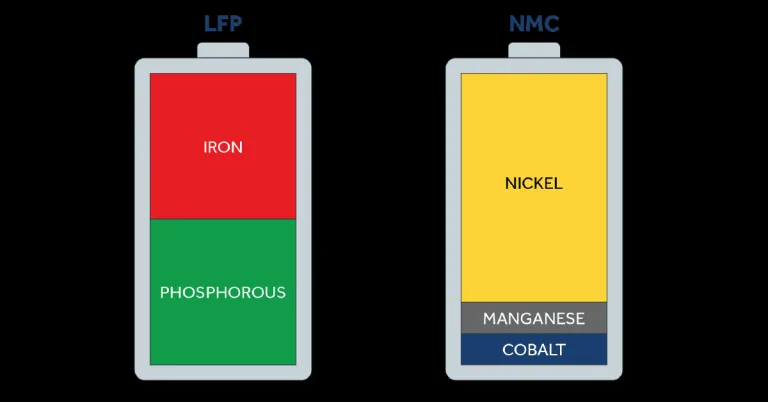
LiFePO4 is a type of lithium-ion battery that uses iron phosphate as the cathode material. It is known for its excellent thermal stability, long cycle life, and high safety profile. LiFePO4 batteries are widely used in energy storage systems, electric vehicles, and solar power storage.
- Cathode material: Iron Phosphate (LiFePO4)
- Voltage: Typically 3.2V per cell
- Energy Density: Lower compared to NMC
NMC (Nickel Manganese Cobalt)
NMC batteries, on the other hand, use a cathode material that combines nickel, manganese, and cobalt in varying proportions. These batteries are favored for their high energy density and powerful performance, which makes them suitable for high-demand applications like electric vehicles and power tools.
- Cathode material: Nickel Manganese Cobalt (LiNiMnCoO2)
- Voltage: Typically 3.7V per cell
- Energy Density: Higher than LiFePO4
2. Energy Density and Performance
The energy density of a battery is a critical factor when considering its overall performance. It determines how much energy a battery can store and deliver in a given amount of space, which is especially important in applications where space is limited, such as electric vehicles (EVs).
LiFePO4
- Energy density: LiFePO4 batteries tend to have a lower energy density compared to NMC batteries. Typically, they offer between 90 to 120 Wh/kg (watt-hours per kilogram), which means they store less energy in the same amount of space.
- Performance: While their energy density is lower, LiFePO4 batteries provide steady discharge performance, making them ideal for applications requiring consistent, moderate power output over time, such as off-grid energy storage and solar energy systems.
NMC
- Energy density: NMC batteries have a much higher energy density, usually between 150 to 250 Wh/kg, making them a better choice for high-performance applications like electric vehicles and high-demand industrial machinery.
- Performance: NMC batteries are capable of delivering higher power output in short bursts, which is beneficial for applications requiring rapid acceleration or large energy inputs, such as in electric cars or power tools.
Conclusion: If your application requires high energy storage in a small space (e.g., electric vehicles), NMC batteries are typically the better choice. However, for more consistent power delivery and applications where space is less of a concern (e.g., renewable energy storage), LiFePO4 could be a better fit.
3. Cycle Life and Durability
The cycle life of a battery refers to how many charge and discharge cycles it can undergo before its capacity significantly diminishes. A long cycle life translates to better longevity, fewer replacements, and lower total cost of ownership over time.
LiFePO4
- LiFePO4 batteries are renowned for their long cycle life. Typically, they can last 3,000 to 5,000 cycles before their capacity drops to 80% of the original value.
- This makes them an excellent choice for applications that require a long lifespan, such as off-grid solar energy systems and energy storage systems.
NMC
- NMC batteries have a shorter cycle life compared to LiFePO4, generally lasting 1,000 to 2,000 cycles before their capacity drops by about 20%.
- While their cycle life is shorter, they still offer good longevity for applications like electric vehicles that may not require as many charge cycles in their lifespan as stationary energy storage systems.
Conclusion: If long-term durability and fewer replacements are critical for your application, LiFePO4 batteries are the better option. For higher-power applications where the cycle life isn’t as critical, NMC might still be a suitable choice.
4. Safety and Thermal Stability
Safety is one of the most important considerations when selecting a battery for any application, particularly when dealing with lithium-ion chemistry.
LiFePO4
- LiFePO4 batteries have an inherently safer chemistry compared to other lithium-ion types like NMC. They are more resistant to thermal runaway, overcharging, and short circuits. In the case of a malfunction or damage, LiFePO4 batteries are much less likely to catch fire or explode.
- Thermal stability: LiFePO4 batteries can operate at higher temperatures without significant performance degradation.
- NMC batteries, while still generally safe, are more prone to thermal runaway compared to LiFePO4, especially if they are overcharged, damaged, or improperly handled. The presence of cobalt in the cathode material can make these batteries more volatile under extreme conditions.
- However, manufacturers incorporate safety features like battery management systems (BMS) to minimize these risks.
Conclusion: For applications where safety is paramount (e.g., stationary energy storage in homes or buildings), LiFePO4 is the more reliable and safer option. For high-performance applications like electric vehicles, where performance takes precedence, NMC batteries are often preferred, with safety features built into the system.
5. Cost and Environmental Impact
LiFePO4
- Cost: LiFePO4 batteries are generally more affordable compared to NMC batteries due to the abundance and lower cost of the raw materials (iron and phosphate).
- Environmental impact: LiFePO4 batteries are more environmentally friendly since they use abundant materials, and phosphate is more sustainable than the cobalt used in NMC batteries.
NMC
- Cost: NMC batteries are typically more expensive than LiFePO4, primarily due to the use of more expensive materials like nickel, manganese, and cobalt.
- Environmental impact: The extraction of materials such as cobalt has raised concerns regarding its environmental and ethical impact. NMC batteries are not as environmentally friendly as LiFePO4, but efforts are being made to source cobalt responsibly and improve recycling methods.
Conclusion: If cost-efficiency and environmental impact are key considerations, LiFePO4 has the advantage. However, NMC batteries may be worth the investment for high-performance applications where energy density and power output are more important.
Conclusion: Which Battery Chemistry Suits Your Energy Needs?
Choosing between LiFePO4 and NMC batteries largely depends on your specific energy requirements:
- LiFePO4 batteries are best suited for long-term, reliable energy storage, especially in off-grid applications, solar systems, and low-to-moderate power demands. Their safety, long cycle life, and cost-effectiveness make them ideal for stationary uses.
- NMC batteries are the preferred choice for high-performance applications that demand high energy density, such as electric vehicles, high-power tools, and rapid acceleration systems. Their higher energy density and better power output make them ideal for applications where space and weight are critical factors.
Ultimately, the choice comes down to balancing performance, safety, lifetime costs, and environmental considerations. By understanding the strengths and limitations of both chemistries, you can make an informed decision based on your energy needs.
