
As the world increasingly turns to lithium-ion batteries (Li-ion) for energy storage and power solutions, fire safety has become a critical concern. Lithium-ion batteries are widely used in applications ranging from electric vehicles (EVs) and consumer electronics to large-scale energy storage systems. While these batteries offer numerous advantages such as high energy density, longer lifespans, and faster charging times, they also come with inherent risks, primarily related to thermal runaway, a process where a battery overheats and potentially catches fire or explodes.
Given the rising deployment of lithium batteries, especially in stationary energy storage applications, the development of fire safety standards has become paramount to ensure their safe integration into various systems. In this article, we explore the need for fire safety standards, the challenges in developing these standards, and the strategies being implemented to mitigate fire risks in lithium battery storage systems.
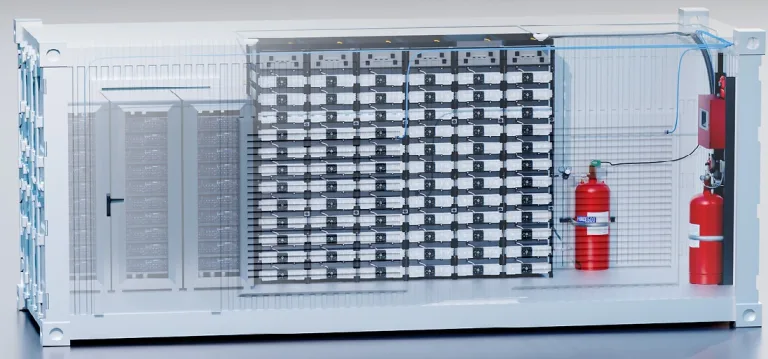
Understanding the Fire Risks of Lithium Batteries
Lithium-ion batteries are not inherently dangerous but can become hazardous under certain conditions. The primary fire risk associated with these batteries comes from thermal runaway, which can be triggered by various factors such as:
- Overcharging: Charging a battery beyond its recommended voltage can cause internal pressure and temperature to rise, leading to a thermal event.
- Short-circuiting: A short circuit, caused by internal faults or external damage to the battery, can rapidly escalate the battery’s temperature.
- Physical damage: Penetration or crushing of the battery can cause the internal components to fail, potentially leading to fires.
- Overheating: Inadequate cooling systems or exposure to high external temperatures can also trigger thermal runaway.
When thermal runaway occurs, the battery may release flammable gases, ignite, and, in the worst-case scenario, cause an explosion. These dangers are more pronounced in large-scale applications such as energy storage systems (ESS), which involve hundreds or thousands of lithium-ion cells connected in series or parallel. As these systems scale up in size, the potential for fire hazards increases, making fire safety standards even more critical.
Current Fire Safety Concerns in Lithium Battery Storage Systems
Lithium battery storage systems have been deployed globally to support renewable energy sources, provide backup power, and stabilize grids. However, their increasing prevalence has highlighted the need for stringent safety measures. Some of the key concerns include:
- Storage System Design: The design of storage systems, including how batteries are housed and cooled, directly affects the likelihood of fire incidents. Systems that are poorly ventilated or lack effective cooling mechanisms can increase the risk of overheating and fires.
- Battery Management Systems (BMS): A Battery Management System (BMS) monitors and controls the charging and discharging of lithium-ion batteries. While a properly designed BMS can mitigate some risks, failures in BMS systems—such as incorrect voltage regulation or poor communication—can contribute to thermal runaway and increase the chances of fire.
- Integration with Fire Suppression Systems: The ability to effectively detect, contain, and suppress a fire is critical. Many battery storage systems currently lack integrated fire suppression systems that can act quickly in the event of a fire. This gap in fire safety can escalate a manageable incident into a catastrophe.
- Fire Spread in Large-Scale Systems: Large energy storage systems can contain a large number of battery cells connected in series and parallel, making fire containment more challenging. Once a fire begins in one cell, it can quickly spread to others, resulting in significant damage and dangerous fires.
- Recycling and Disposal: Improper disposal of spent lithium-ion batteries can also pose fire risks. When these batteries are improperly recycled or discarded, they can short-circuit, overheat, and catch fire.
The Need for Fire Safety Standards
The growing concerns over lithium battery safety have prompted the development of various standards and regulations aimed at mitigating fire risks. These standards not only address fire prevention but also include measures to detect fires early and contain them before they escalate.
Several key areas where standards are essential include:
- Battery Design and Construction: Fire safety standards need to ensure that lithium-ion batteries are designed with adequate protection against short circuits, overcharging, and overheating. This includes robust cell enclosures, proper insulation, and protective circuits to prevent thermal runaway.
- Energy Storage System Design: For large-scale storage systems, guidelines must address the overall architecture of the system, including ventilation, cooling, and fire-resistant materials. A good system design minimizes the chances of a battery failure turning into a large-scale fire.
- Battery Management and Monitoring: Standards must require the inclusion of sophisticated Battery Management Systems (BMS) to actively monitor the temperature, voltage, and overall health of each cell. BMS should be able to cut off charging if a fault is detected and should allow for easy integration with fire detection and suppression systems.
- Fire Detection and Suppression: Standards must advocate for the use of reliable fire detection and suppression systems within storage systems. Smoke detection, temperature sensors, and gas detectors should be incorporated into the system to detect issues before they escalate. Additionally, appropriate suppression systems, such as CO2, dry chemical, or foam systems, should be recommended for different types of installations.
- Emergency Response and Training: Fire safety standards should also emphasize the importance of emergency response protocols and training for staff. In the event of a fire, operators must know how to act quickly and safely. This includes having clear evacuation plans, understanding how to isolate affected areas, and knowing how to engage fire suppression systems.
Developing Fire Safety Standards for Lithium Battery Storage Systems
Efforts to develop fire safety standards for lithium-ion batteries have been undertaken by multiple organizations and regulatory bodies, including the International Electrotechnical Commission (IEC), the National Fire Protection Association (NFPA), and the Underwriters Laboratories (UL). Some notable initiatives include:
- IEC 62619: This standard is focused on the safety requirements for secondary lithium cells and batteries, including those used in energy storage systems. It provides guidelines for testing, fire resistance, and battery management system functionality.
- UL 9540A: UL has developed this standard for the fire safety testing of large lithium-ion battery energy storage systems. It involves rigorous fire propagation testing to evaluate the potential risk of a battery fire spreading to other cells and sections of the storage system.
- NFPA 855: This standard addresses the installation and safety requirements for stationary energy storage systems, including fire prevention and fire suppression strategies.
- IEC 62933: A more recent standard aimed at ensuring the safety and environmental impact of battery energy storage systems. It focuses on fire protection, maintenance, and monitoring of these systems.
Prevention Strategies and Future Directions
To improve fire safety, the industry is focusing on a range of innovative strategies:
- Solid-State Batteries: Solid-state batteries, which use a solid electrolyte instead of a liquid one, are being developed as safer alternatives to conventional lithium-ion batteries. These batteries are less prone to leakage and thermal runaway.
- Advanced Cooling Systems: Research into advanced cooling systems, such as liquid cooling and phase change materials, can help regulate the temperature of batteries and prevent overheating.
- Fire-Resistant Materials: Fire-resistant coatings and materials that can withstand high temperatures are being incorporated into battery enclosures and storage system designs to reduce the spread of fires.
- AI and Machine Learning in Safety Monitoring: The use of AI-powered predictive maintenance tools and machine learning algorithms can help anticipate failures and identify potential fire risks before they occur.
Conclusion
The development of fire safety standards for lithium-ion battery storage systems is crucial to ensuring the safe and sustainable use of this technology. As the demand for lithium-ion batteries continues to grow, particularly for large-scale energy storage systems, ensuring their safe integration into power grids and buildings becomes a top priority. Comprehensive standards that address battery design, system architecture, fire detection, and emergency response are key to preventing fire-related incidents. By advancing these standards and incorporating innovative technologies, we can mitigate the risks associated with lithium battery storage systems and support their wider adoption in the renewable energy sector.
