
As the demand for lithium-ion batteries continues to rise in applications ranging from electric vehicles (EVs) to renewable energy systems, the need for efficient battery management has never been more critical. At the heart of this demand lies the Battery Management System (BMS), a crucial component that ensures lithium battery packs perform optimally and safely.
A BMS is responsible for managing a variety of tasks, including monitoring battery health, optimizing performance, and ensuring safety protocols are followed. Without a BMS, the risk of overcharging, overheating, deep discharge, and unbalanced cells can lead to reduced battery lifespan, inefficiency, and even dangerous situations such as fires or thermal runaway.
In this article, we will explore the role of the BMS in lithium battery packs, why it’s necessary, and how it helps extend battery life while ensuring safety.
1. What Is a Battery Management System (BMS)?
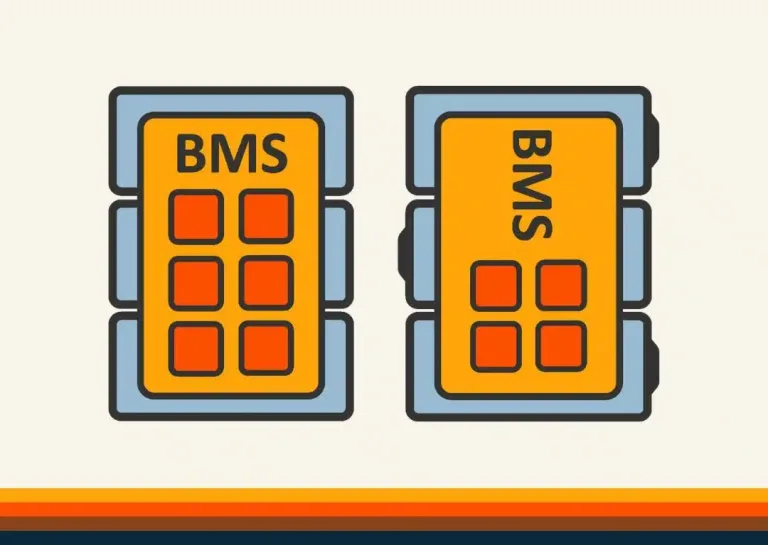
A Battery Management System (BMS) is an electronic system that manages the charging, discharging, and overall health of a lithium battery pack. The BMS ensures that the individual cells in the pack operate within safe parameters, balancing them to prevent dangerous conditions. It works in conjunction with the battery charger and the load, using a combination of sensors, algorithms, and control systems.
Key functions of a BMS include:
- Voltage Monitoring: Keeping track of the voltage of each cell in the pack to ensure none are overcharged or discharged below their safe limits.
- Current Monitoring: Measuring the current flowing into and out of the pack to prevent excessive draw or overcurrent situations.
- Temperature Control: Monitoring the temperature of the battery cells to ensure they do not overheat, which could lead to failure or fire.
- State of Charge (SOC) Estimation: Determining the battery’s remaining charge, so users know how much power is available.
- State of Health (SOH) Monitoring: Assessing the overall health of the battery, including its ability to hold a charge and whether it is deteriorating.
- Cell Balancing: Ensuring all the cells in the pack are charged equally to prevent overvoltage in some cells and undervoltage in others.
2. The Importance of a BMS for Lithium Battery Packs
Lithium-ion batteries are highly sensitive to voltage fluctuations, temperature changes, and imbalanced cells. Without a BMS, these factors can quickly lead to damage or failure. Here’s why a BMS is critical for lithium battery packs:
- Protection Against Overcharging and Overdischarging
Lithium-ion batteries can be damaged by overcharging or discharging beyond a certain voltage threshold. If a battery is overcharged, it can lead to thermal runaway, a process where the battery heats up uncontrollably and may catch fire. Similarly, discharging a lithium battery below its cut-off voltage can cause irreversible damage to the cells, reducing their ability to store energy.
A BMS monitors the battery’s voltage and ensures it remains within safe limits, cutting off charging or discharging when necessary.
- Ensuring Balanced Cell Voltages
In a lithium battery pack, multiple cells are connected in series or parallel to achieve the desired voltage and capacity. However, due to manufacturing tolerances or minor differences in the cells, the voltage of individual cells can become unbalanced over time. This can result in some cells being overcharged while others are undercharged, which reduces the overall performance of the battery and shortens its lifespan.
The BMS continuously monitors the voltage of each cell and uses a technique known as cell balancing to ensure that all cells in the pack charge and discharge evenly. This helps prevent cell degradation, increasing the overall capacity and life cycle of the battery.
- Temperature Monitoring and Control
Lithium batteries are particularly sensitive to temperature fluctuations. Overheating can cause the battery to fail, while extremely cold temperatures can reduce its efficiency. A BMS keeps track of the temperature of the individual cells and the battery pack as a whole.
If the temperature exceeds safe limits, the BMS can:
- Cut off charging or discharging to prevent heat buildup.
- Activate cooling systems (if available) to reduce the temperature.
- Trigger warning systems for users to take action.
Temperature control is especially important in electric vehicles (EVs), grid energy storage systems, and other high-performance applications where battery safety is paramount.
- Enhancing Battery Life and Performance
A well-designed BMS can improve the cycle life of a lithium battery pack. By managing charge/discharge cycles, the BMS ensures that the battery operates within the optimal voltage range, preventing damage from extreme charging conditions. Additionally, the BMS helps maximize the depth of discharge (DoD), allowing the battery to be discharged deeper without damaging the cells, ultimately improving overall battery capacity and performance over time.
3. Key Features of a High-Quality BMS
To fully realize the benefits of lithium battery technology, it is essential to have a high-quality BMS. Here are some key features to look for in a BMS:
- Fault Detection and Safety Alarms
A good BMS should have built-in fault detection capabilities, alerting the user to any abnormal conditions such as overcharging, overcurrent, short circuits, or high temperatures. It should also have a fail-safe mechanism to protect the system in case of critical errors.
- Communication Interface
Many modern BMS units come with communication interfaces, such as CAN bus, RS485, or Bluetooth, that allow real-time monitoring of the battery’s status. This is especially useful for electric vehicles and solar energy storage systems, where users need to track battery health, performance, and remaining charge via smartphone apps or central control systems.
- High-Precision Voltage and Current Sensing
Accurate voltage and current measurement is essential for maintaining battery safety. The BMS should be able to sense small voltage differences between cells, allowing it to balance them effectively. Similarly, precise current monitoring ensures that the battery is not subjected to excessive current, which could cause overheating or degradation.
- Modular Design
For large-scale applications such as energy storage systems or electric vehicles, a modular BMS design allows the system to be expanded or customized based on the number of cells in the battery pack. Modular BMS units can be connected in series or parallel to manage large, multi-cell systems.
4. Conclusion: The Crucial Role of a BMS in Lithium Battery Systems
As lithium-ion batteries continue to power everything from consumer electronics to electric vehicles and renewable energy systems, the need for a Battery Management System (BMS) becomes increasingly evident. The BMS ensures that lithium battery packs operate efficiently, safely, and reliably by monitoring individual cell voltages, balancing charge, controlling temperature, and providing fault detection.
In addition to maximizing performance and lifecycle, a well-designed BMS also ensures that batteries remain safe throughout their use, preventing potentially dangerous conditions like thermal runaway or overdischarge. As the demand for high-performance, long-lasting batteries grows, the BMS will continue to be an essential component in optimizing battery operation, ensuring safety, and maximizing value.
For anyone designing, operating, or maintaining lithium battery-powered systems, understanding and integrating a reliable BMS is key to ensuring the longevity and safety of the battery system.
