
リチウムイオン電池の世界へ, 2 つの化学がよく比較対象として取り上げられます。リン酸鉄リチウム (LiFePO4) そして ニッケル マンガン コバルト (NMC). これらのバッテリータイプは両方とも、電気自動車からさまざまな用途で一般的に使用されています。 (EV) 再生可能エネルギー貯蔵へ, しかし、それらはその構成と性能特性に基づいて明確な利点と欠点をもたらします。. 適切な種類のリチウム電池の選択は、いくつかの要因に依存します。, 含む エネルギーの必要性, 予算, 安全上の考慮事項, そして 生涯要件.
この記事では, 比較してみます LiFePO4 そして NMC バッテリーの観点から見ると パフォーマンス, 料金, 安全性, サイクル寿命, そして 環境への影響, どの化学反応がエネルギー需要に最も適しているかを判断するのに役立ちます.
1. バッテリーの化学の概要: LiFePO4 対. NMC
LiFePO4 (リン酸鉄リチウム)
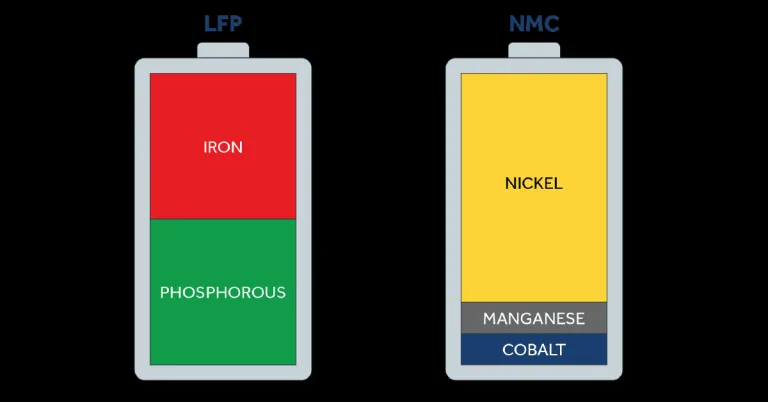
LiFePO4 はリチウムイオン電池の一種で、 リン酸鉄 正極材料として. 優れた熱安定性で知られています, 長いサイクル寿命, 高い安全性プロファイル. LiFePO4 電池は広く使用されています。 エネルギー貯蔵システム, 電気自動車, そして 太陽光発電の蓄電.
- 正極材料: リン酸鉄 (LiFePO4)
- 電圧: 通常、セルあたり 3.2V
- エネルギー密度: NMCと比較して低い
NMC (ニッケル マンガン コバルト)
NMCバッテリー, 一方で, を組み合わせた正極材料を使用する ニッケル, マンガン, そして コバルト さまざまな割合で. これらのバッテリーは次のような理由で好まれています。 高いエネルギー密度 そして パワフルなパフォーマンス, そのため、次のような需要の高いアプリケーションに適しています。 電気自動車 そして 電動工具.
- 正極材料: ニッケル マンガン コバルト (LiNiMnCoO2)
- 電圧: 通常、セルあたり 3.7V
- エネルギー密度: LiFePO4よりも高い
2. エネルギー密度とパフォーマンス
の エネルギー密度 バッテリーの全体的なパフォーマンスを考慮する場合、バッテリーの容量は重要な要素です。. バッテリーが所定の空間にどれだけのエネルギーを蓄え、供給できるかを決定します。, これはスペースが限られている用途では特に重要です, 電気自動車など (EV).
LiFePO4
- エネルギー密度: LiFePO4 バッテリーには次のような特性がある傾向があります。 エネルギー密度が低い NMCバッテリーとの比較. 通常, 彼らはその間に提供します 90 に 120 Wh/kg (キログラムあたりのワット時), つまり、同じ量の空間に蓄えるエネルギーが少なくなるということです.
- パフォーマンス: エネルギー密度は低いですが、, LiFePO4 バッテリーが提供する 安定した吐出性能, 一貫性を必要とするアプリケーションに最適です。, 長期にわたる中程度の出力, のような オフグリッドエネルギー貯蔵 そして 太陽エネルギーシステム.
NMC
- エネルギー密度: NMC バッテリーはエネルギー密度がはるかに高い, 通常はその間 150 に 250 Wh/kg, そのため、次のような高性能アプリケーションにとってより良い選択肢となります。 電気自動車 そして 需要の高い産業機械.
- パフォーマンス: NMC バッテリーは次のことを実現できます。 より高い出力 短いバーストで, 急速な加速や大きなエネルギー入力が必要なアプリケーションに有益です。, のような 電気自動車 または 電動工具.
結論: アプリケーションが必要な場合 小さなスペースで高エネルギー貯蔵 (例えば, 電気自動車), 通常は NMC バッテリーがより良い選択です. しかし, もっと 一貫した電力供給 およびアプリケーション スペースはあまり気にならない (例えば, 再生可能エネルギー貯蔵), LiFePO4 の方が適している可能性があります.
3. サイクル寿命と耐久性
の サイクル寿命 バッテリーの容量とは、容量が大幅に低下するまでに充電と放電のサイクルを何回繰り返すことができるかを指します。. サイクル寿命が長いということは、 より良い長寿, 代替品が少なくなる, 長期にわたる総所有コストの削減.
LiFePO4
- LiFePO4 バッテリーは、次の点で有名です。 長いサイクル寿命. 通常, 彼らは長持ちできる 3,000 に 5,000 サイクル 能力が低下する前に 80% 元の値の.
- これにより、彼らは 素晴らしい選択 を必要とするアプリケーションの場合、 長寿命, のような オフグリッド太陽エネルギーシステム そして エネルギー貯蔵システム.
NMC
- NMC バッテリーは LiFePO4 と比較してサイクル寿命が短い, 一般的に持続する 1,000 に 2,000 サイクル 能力が低下する前に 20%.
- サイクル寿命は短いですが、, 彼らはまだ提供しています 長寿 のようなアプリケーション向け 電気自動車 定置型エネルギー貯蔵システムほど寿命中に充電サイクルを必要としない可能性がある.
結論: もし 長期耐久性 そして 代替品が少なくなる アプリケーションにとって重要です, LiFePO4 バッテリーの方が良い選択肢です. 高出力アプリケーションの場合、 サイクル寿命 それほど重要ではありません, NMC は依然として適切な選択肢である可能性があります.
4. 安全性と熱安定性
安全性は、あらゆる用途のバッテリーを選択する際に最も重要な考慮事項の 1 つです, 特にリチウムイオン化学を扱う場合.
LiFePO4
- LiFePO4 バッテリーには、 本質的に安全な化学 NMCなどの他のリチウムイオンタイプと比較して. 彼らです 熱暴走に対する耐性が向上, 過充電, そして 短絡. 故障や破損の場合, LiFePO4 バッテリーは発火や爆発の可能性がはるかに低いです.
- 熱安定性: LiFePO4 バッテリーは、性能を大幅に低下させることなく高温で動作できます。.
- NMCバッテリー, まだ一般的には安全ですが, は 熱暴走しやすくなる LiFePO4との比較, 特に過充電されている場合, 破損した, または不適切に扱われた場合. の存在 コバルト 正極材料が極端な条件下で電池の揮発性を高める可能性があります.
- しかし, メーカーが組み込む 安全機能 のように バッテリー管理システム (BMS) これらのリスクを最小限に抑えるために.
結論: アプリケーションの場合 安全性 最も重要です (例えば, 住宅や建物内の定置型エネルギー貯蔵), LiFePO4 はより信頼性が高く安全なオプションです. 電気自動車などの高性能アプリケーション向け, パフォーマンスが優先される場所, 多くの場合、NMC バッテリーが好まれます, システムに安全機能が組み込まれている.
5. コストと環境への影響
LiFePO4
- 料金: LiFePO4 バッテリーは一般に、 手頃な価格 原材料が豊富でコストが低いため、NMCバッテリーと比較して (鉄とリン酸塩).
- 環境への影響: LiFePO4バッテリーはさらに多くの 環境に優しい 素材をふんだんに使っているので, そして リン酸塩 NMCバッテリーに使用されるコバルトよりも持続可能です.
NMC
- 料金: NMC バッテリーは通常、 高い LiFePO4よりも, 主に次のようなより高価な材料を使用するためです。 ニッケル, マンガン, そして コバルト.
- 環境への影響: などの物質の抽出 コバルト 環境および倫理的影響に関する懸念を引き起こしている. NMC バッテリーは LiFePO4 ほど環境に優しくありません, しかし、コバルトを責任を持って調達し、リサイクル方法を改善する取り組みが行われています。.
結論: もし 費用対効果 そして 環境への影響 重要な考慮事項です, LiFePO4には利点があります. しかし, NMC バッテリーは、エネルギー密度と出力がより重要な高性能アプリケーションには投資する価値があるかもしれません。.
結論: どのバッテリーの化学的性質がエネルギー需要に適合するか?
どちらかを選択する LiFePO4 そして NMC バッテリーは特定のエネルギー要件に大きく依存します:
- LiFePO4電池 に最適です 長期的な, 信頼性の高いエネルギー貯蔵, 特に オフグリッドアプリケーション, 太陽光発電システム, そして 低から中程度の電力需要. 彼らの 安全性, 長いサイクル寿命, そして 費用対効果 固定用途に最適です.
- NMCバッテリー が好ましい選択肢です 高性能アプリケーション その要求 高いエネルギー密度, のような 電気自動車, ハイパワーツール, そして 急加速システム. 彼らの より高いエネルギー密度 そして より良い出力 スペースと重量が重要な要素となる用途に最適です。.
結局のところ, 選択は結局のところバランスを取ることになる パフォーマンス, 安全性, 生涯コスト, そして 環境への配慮. 両方の化学の長所と限界を理解することで, エネルギー需要に基づいて情報に基づいた決定を下すことができます.
